Most people photograph a tower the same way. One wide shot from the square, one from the top, then the phone goes back in a pocket. Which is a shame, because the story of a tower isn't in its silhouette. It's in the pitted stone at shoulder height, the initials scratched beside the fourth window, the shallow hollow worn into a tread where three generations of bell-ringers put their right foot.
What follows is a shot list. Twelve details, roughly in the order you'll meet them on the way up, plus a few thoughts on light and timing. It costs maybe twenty extra minutes on the climb and gives you photographs that are actually useful later — for a caption, a paragraph, or the small local history nobody has written down yet.
Start With the Stone Itself
Before you look up, look at the wall beside your shoulder. Every tower is a record of what the town could afford and when. Good dressed blocks at the base, rubble infill higher up, a band of brick patching a wall that failed in some century nobody remembers. Look for reused pieces, too: a fragment of carved marble or a fluted block turned the wrong way and set into a plain wall, salvaged from something older.
To photograph stone, fill the frame. A metre of wall beats a whole elevation, because texture doesn't read at distance. Look for raking light — sun almost parallel to the surface — which turns tool marks, pitting and mortar joints into a landscape. A phone torch held at a very low angle does the same job on a shaded face. And do mind your own shadow; step to the side until it's out of the frame, or the picture becomes a photo of yourself.
Inscriptions, Dates and Mason's Marks
Carved lettering is where towers get personal. A date over a door. A parish plaque with the name of a priest or a mayor. A line of Latin that half the town can no longer translate. Lower down, at hand height or on the jamb of a narrow window, you'll often find mason's marks — small geometric scratches left by the men who cut the blocks, paid by the piece and keen to prove which pieces were theirs.
Shoot inscriptions twice. Once straight on, square to the wall, so the letters are legible and the frame edges are honest. Then once from the side, with light across the surface, so the carving has depth. If a date is high up, zoom rather than climb; tower stairs are no place for balancing on a sill to get a better angle.
And leave the surface alone. No chalk, no pencil rubbings, no wiping moss away to read a name. Some of these stones are softer than they look, and the whole point of photographing them is that they survive.
The Stairway Is the Best Story in the Building
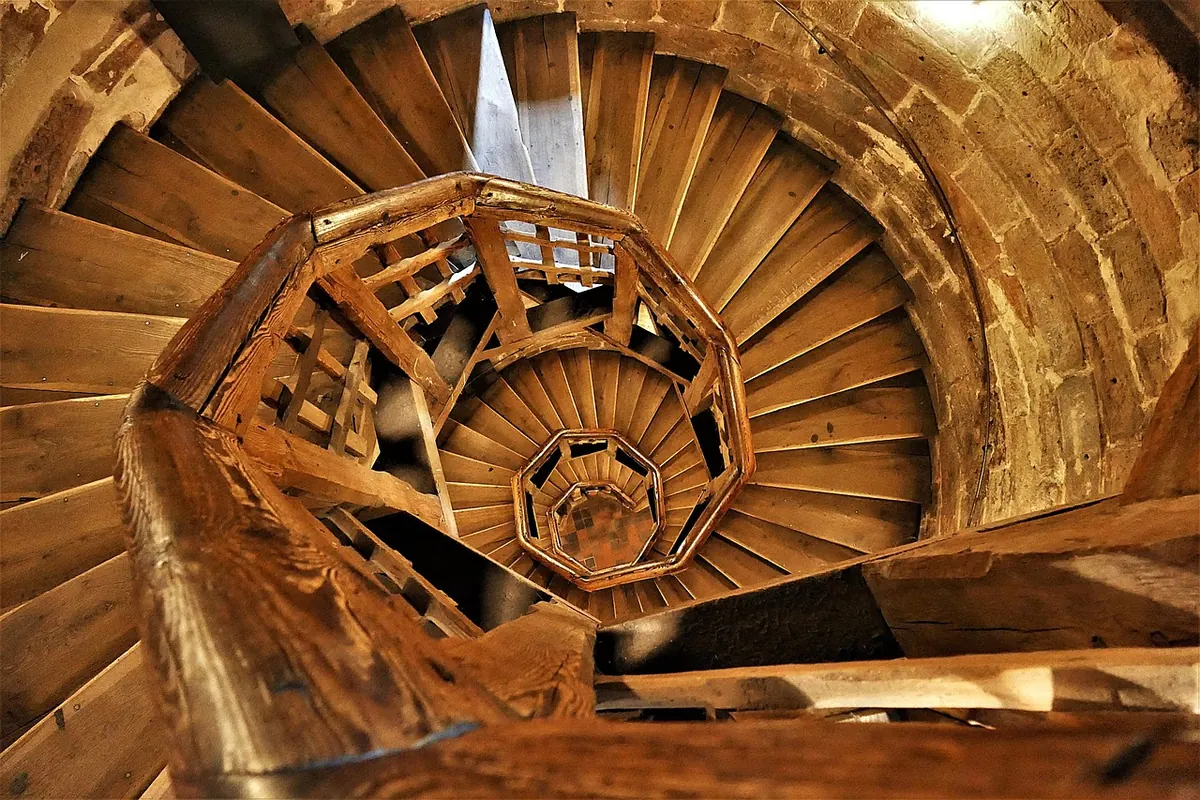
Stairs get photographed badly because people try to show the whole spiral. Better to show what the spiral has suffered. Treads worn into shallow bowls in the middle, always the same side of the step, always the same foot. A handrail polished pale where hands have slid along it for a hundred years. A wall rubbed smooth at hip height on a turn so tight that everyone brushes it.
- Look down first. Stand above a flight and shoot the treads, not the view.
- Look up second. A tight spiral photographed from below becomes a pattern of light and stone.
- Use the openings. Arrow slits and small windows are light sources as much as views; expose for the bright slot and let the wall go dark.
- Bracket if you can. Interiors like this run from deep shadow to blown-out sky in one frame.
There is a persistent claim that some towers were built with stairs turning one way to favour a right-handed defender on the way up. Whether or not it's true of the tower you're standing in, the geometry makes for good pictures — and for a good question to ask whoever keeps the key.
The tower will still be there next year. The light falling on the third landing will not.
Doors, Hinges and the Things That Still Work
The hardware gets overlooked because it's usually dark and often rusty, which is exactly why it's worth shooting. Long strap hinges with hand-forged nails. A lock plate with a keyhole cut for a key nobody has carried in decades. Bolts, staples, chains, a padlock added in living memory next to ironwork four centuries older.
Get close, and check your focus on the metal rather than the wood. If a door is open, photograph the threshold from inside looking out — the light will do the work for you, and you'll catch how thick the wall really is. That thickness is a fact you can quote later: it tells you what the tower was built to withstand.
Bells, Clocks and the Top of the Building
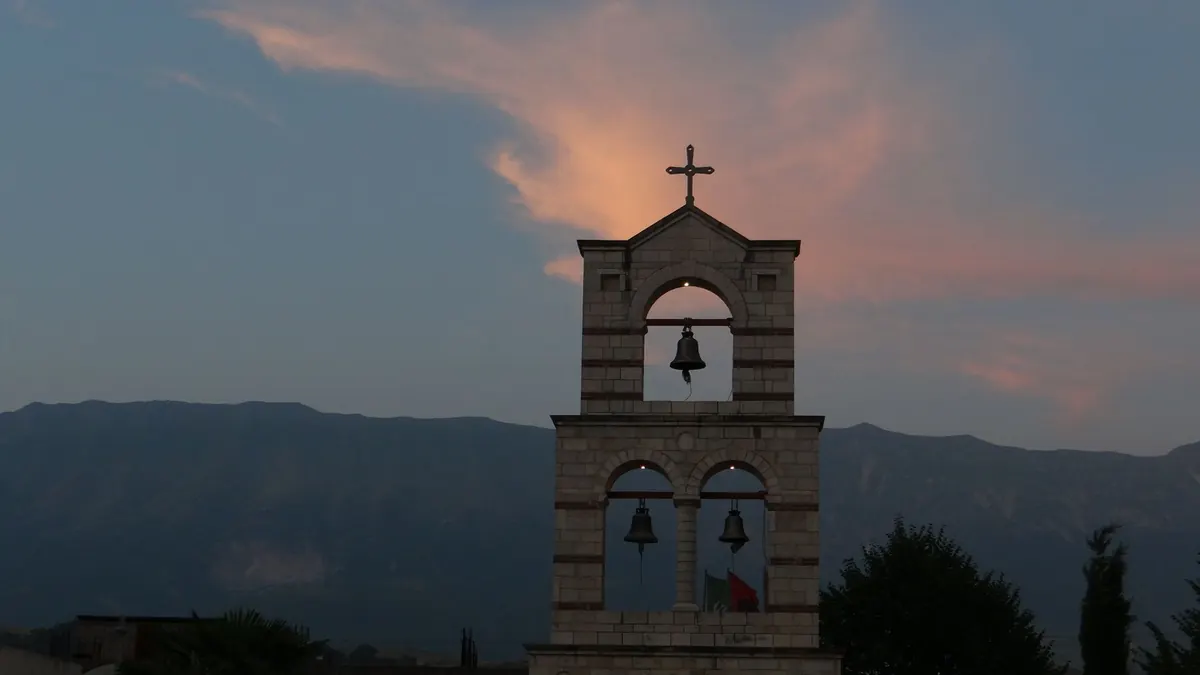
If you can reach the bell chamber, photograph the bell's shoulder, where inscriptions and founders' names usually sit. Look at the frame, too: the wear on the bearings, the notch a rope has cut into its guide, the patched timber that shows how often the thing has been repaired. If you can't get up there, a long lens from the square will still give you the clock face, the numerals, the hands, the weathervane and the lightning rod — all of which change character with the sky behind them.
Then, at the top, resist the obvious panorama for a moment. Photograph the window opening itself: the stone surround, the sill, the ironwork, with the town beyond it. Four openings, four framings of the same rooftops. Those are the pictures people stop to look at.
Light, Weather and Timing
Overcast days are the best days for stone, because the soft light keeps detail in both the highlights and the shadows. Sun is for raking angles in the morning or late afternoon. Rain is underrated — wet stone darkens and inscriptions come up sharp for a few minutes. If you want the exterior at its most photogenic, go at dusk, when the tower is still visible against the sky and the first windows light up around it.
Whatever the weather, write things down. A photograph of a scratched date is worth very little six months later without a note saying which face, which landing, which side of the door.
The Twelve-Shot Checklist
- A square metre of stone at shoulder height, filling the frame.
- A repair where two materials meet — brick into stone, new into old.
- A carved date, initial or mason's mark, shot straight on and from the side.
- Graffiti, old and new, in the same frame if you can manage it.
- The worn centre of a stair tread, shot from above.
- A slit window or opening, exposed for the light rather than the view.
- The handrail, pale where hands go.
- A hinge, lock plate or bolt on the tower door.
- The bell rope, or the notch it has cut in its guide.
- The town seen tightly through the highest opening.
- The clock face, vane or rod, shot from below.
- Something you didn't expect — a nest, a web, a pencil mark, a name.
Work the list on the way up rather than the way down; you'll be fresher and less rushed. Then, before you leave the top, put the camera away for a minute and simply look. The shot you remember to take on the way down is usually the one that ends up in the story.
Photo: HOerwin56 / Pixabay