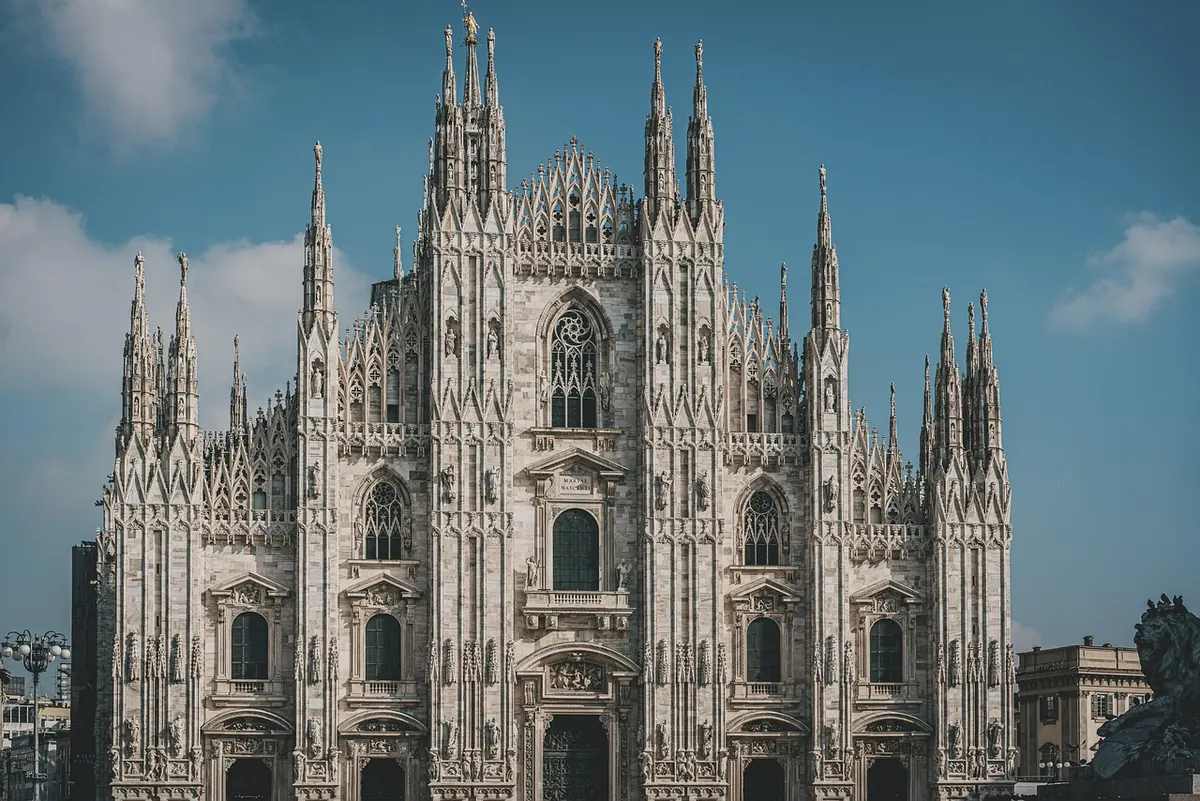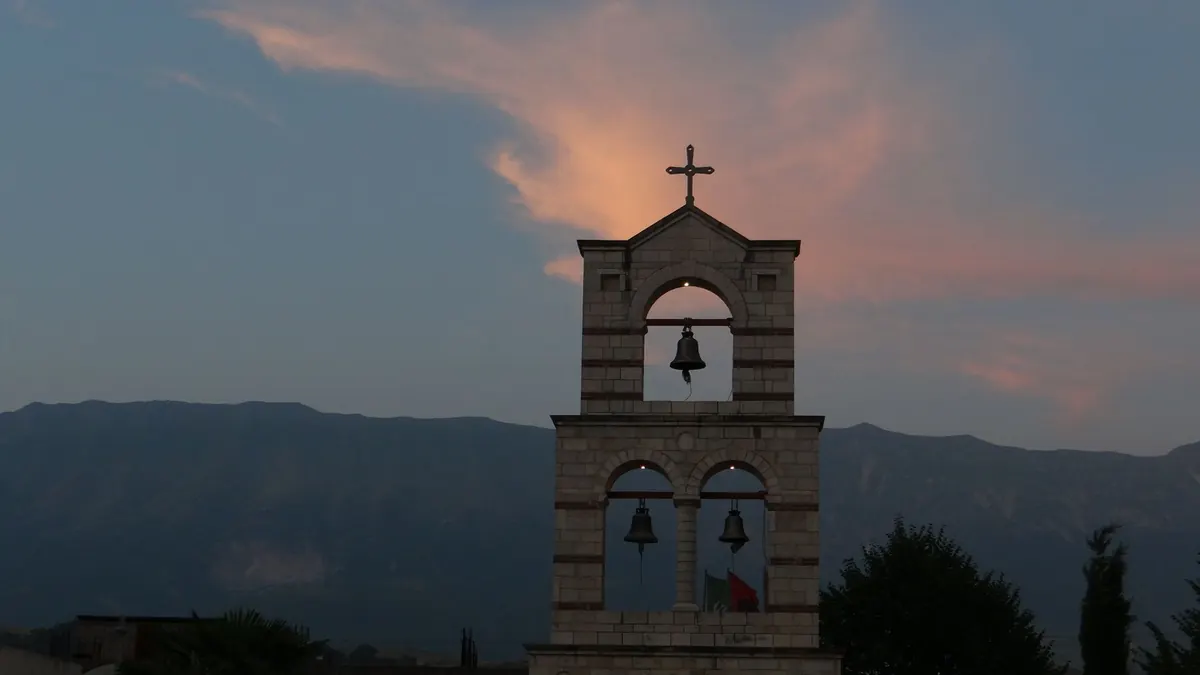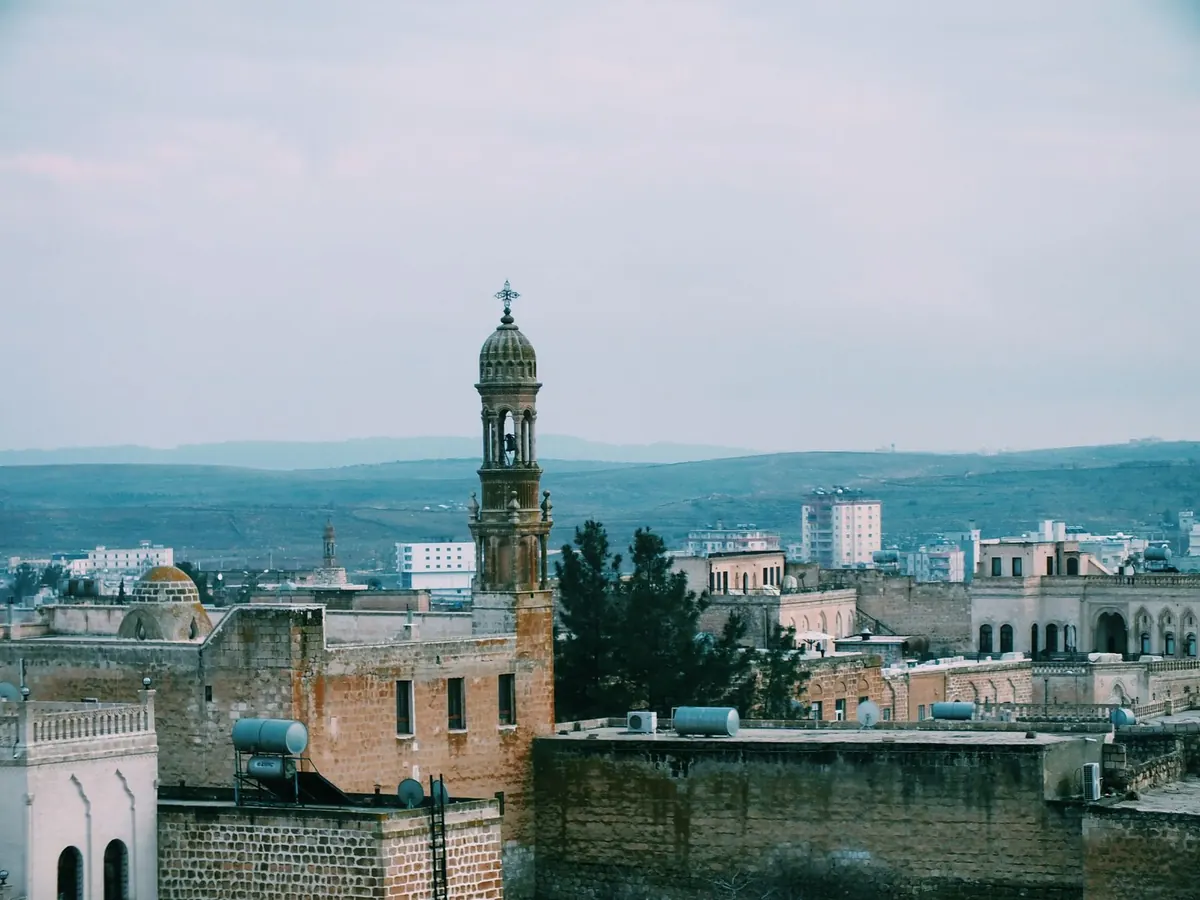
Stand in almost any small hill town in central or northern Italy and the roofline gives the story away. Something always pokes above the tiles: a square stump of stone, a brick shaft with a bell inside, a crenellated top that looks like a chess piece left on the board. Visitors often assume these are church towers. Many of them are not. Some were lookout posts. Some were the town's loudspeaker. Some were a family's way of saying, in stone, that it had money and was not afraid to use it.
None of that requires a degree in medieval history to understand. It requires only a little curiosity about why anyone would haul heavy masonry four or five storeys into the air when a perfectly good house would do.
Three Reasons, Not One
Towers in hill towns get lumped together, but they answered different needs, and often the needs overlapped in the same building.
The first need was safety: height gives you sight. From a tower you can see a road, a valley, an approaching column of men long before anyone on the ground can. The second was collective: a bell in a tall tower can be heard across the whole town at once, which is a remarkably efficient way to run a place before telephones, printed notices or loudspeakers. The third was personal: height is visible from a distance, and visible things can be read as status. A tall tower said something about the family that paid for it, and everyone in the valley could read it.
There was also a plainer reason that gets forgotten. Hill towns are cramped. The buildable ground inside the walls was limited, and every metre of it was expensive and fought over. Building up rather than out solved a real practical problem. If that sounds familiar, it should: it is exactly why cities build tall today where land is scarce.
Defence: Height as an Early Warning System
The oldest logic is the simplest. Put a tower on the highest point you have, keep someone in it, and watch.
Watchtowers worked as a network rather than as individual buildings. A tower on one ridge could see the next town's tower, and that town could see the one beyond it. Signals travelled along the chain: smoke by day, fire by night, sometimes a flag hung at a particular angle. A message could cross a valley system in the time it takes to light a few fires. Small towns that could not afford a standing army could at least afford a pair of eyes and a brazier.
Towers also formed part of the defences themselves. Gates were the weak point of any wall, so gates got towers. Corners of walls got towers, because corners are where attackers can work out of sight of the defenders on the straight stretches. And inside the town, a private tower could serve as a last refuge: many tower houses had their entrance at first-floor level, reached by a wooden stair or ladder that could be pulled up and burned. If the street turned hostile, you went up and took the stairs with you.
The Civic Tower: A Town's Own Voice
If you are standing in a small piazza and the tower is attached to a solid public building, you are almost certainly looking at a civic tower rather than a private one. Its job was to speak for the community.
Different bells meant different things, and people learned the code the way we learn a phone's notification sounds. One bell for fire. One for a public assembly. One for the closing of the gates or the evening curfew. One for danger. In many towns the great bell also marked the working day, which made the tower the closest thing to a shared clock the town had.
Later, actual clocks arrived on these towers, and the tower became timekeeper as well as alarm. The clock face said: this town organises its own hours. The tower flew the town's standard. It often held the documents and seals of the commune, and the rooms at its base might serve as a strongroom or a cell. Flat-topped and crenellated, it was built to be useful and to be seen being useful.
That is why civic towers were usually the tallest thing in town, and why towns competed with their neighbours over them. The message was not subtle: we are independent, we can afford this, and we intend to stay.
Family Towers: Stone Made Personal
The towers that surprise people most are the private ones — a tower house with a family name attached, built by a clan rather than a council. In a period when local power rested on land, alliances and the willingness to defend both, a tall tower worked as a public claim.
Height was the point. If your neighbour's tower was three storeys, yours became four. Rivalry like this got out of hand often enough that some towns passed rules limiting how high private towers could rise, and enforced them by making owners cut their towers down. Losing a factional fight could cost you your tower's top floors as well as your pride; cutting an enemy's tower down to a stump was a recognised way of settling a score.
Bologna still shows what this looked like at scale, with the two leaning towers that draw crowds today standing as survivors of a skyline that was once crowded with them. San Gimignano is the other name that comes up, because enough of its family towers remain to let you picture the effect. But smaller towns all over the centre and north have one or two left, often unrecognised because they now serve as bell towers, water towers or simply the back end of a restaurant.
These family towers were not just displays. The lower floors stored grain and oil. The upper floors were living space. The whole thing was defensible, and defensibility was a household concern, not only a military one.
Why They Stopped Building Them
Tall, thin masonry towers are a poor answer to artillery. From the fourteenth and fifteenth centuries onwards, gunpowder weapons made the exposed upper storeys of a slender tower a liability rather than an advantage, and the sensible money went into low, thick walls and earthworks instead.
Politics pushed the same way. As larger regional states took over the government of small towns, private military architecture stopped being welcome. A family fortress in a hill town looked less like local pride and more like a problem. Meanwhile the fashion in domestic building shifted towards windows, loggias and wide staircases — comfort instead of defensibility.
Many towers were shortened for structural reasons too. Old towers lean, crack and shed masonry, and a town with a dangerous stump on its skyline usually trimmed it rather than rebuilt it. That is why so many surviving towers are noticeably squatter than the pictures in your head.
How to Read a Tower in Ten Minutes
You do not need a guidebook to work out what a tower was for. Ask it a few questions and it will usually tell you.
- Where is it? On the highest ground in town, or on a ridge line facing outward: probably a watchtower. In the main piazza next to a public building: civic. Attached to a church: bell tower, though the shaft may have started life as something else.
- Where is the door? An entrance at first-floor level, with nothing but a gap below it, is the signature of a tower house built for defence. Look for the blocked-up doorway; it is often still visible in the stone.
- What does the top look like? A flat, crenellated top with later brickwork above the old stone suggests a tower that was truncated and then capped. A pointed spire is usually a later addition with no defensive purpose at all.
- Are there holes in the masonry? Regular rows of small square holes are putlog holes, left where wooden scaffolding poles were inserted during building. They tell you roughly when the wall went up and how it was built.
- Is it alone or in company? A single tower with nothing around it was probably civic or defensive. Two or three close together, slightly off the main piazza, hint at a street of rival families.
Do this once and the town's skyline stops being decoration. You start noticing which towers are churches, which are leftovers of family feuds, and which are the town's old alarm system standing quietly with a mobile phone mast bolted to its side. Take a walk at dusk, when the light rakes across the stone and the patched masonry shows clearly, and you will see the joins. Small hill towns are unusually generous that way: the evidence is all still there, at eye level and above it, waiting for someone to look up.
Photo: Zülfü Demir📸 / Pexels